
How can I stop my dog chasing?
Chasing can be a worrying issue. Your dog could cause an accident if he’s chasing something like a car or bicycle, could be shot if chasing livestock and he could seriously injure himself as well.
Why do dogs chase?
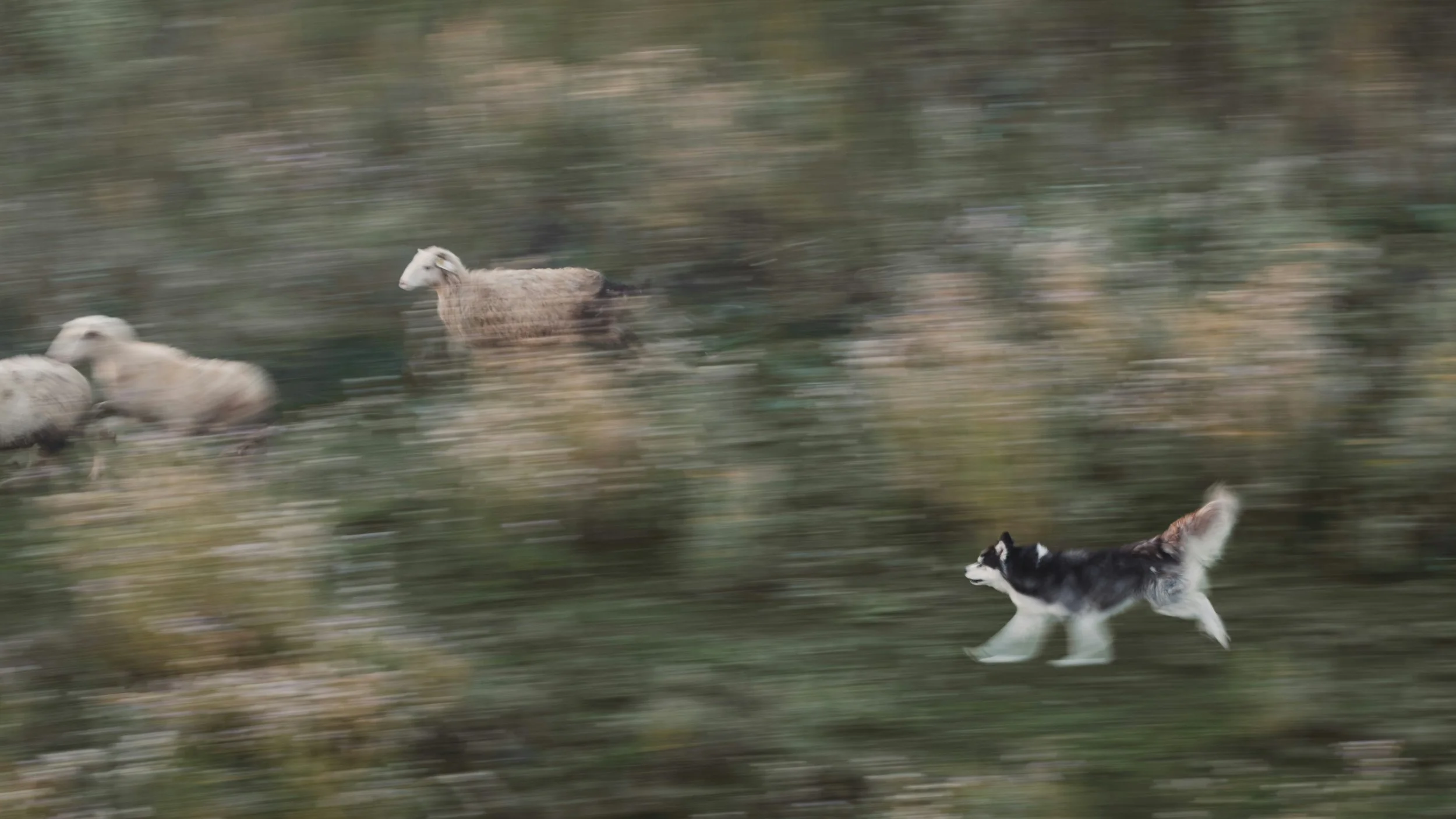
Dogs chase things because they love it! It’s a self-reinforcing habit, which means that, for some dogs, the more they do it the more they want to do it. Your dog doesn’t need a reward to learn to chase things like he would in order to learn a cue like ‘Sit’ or ‘Stay’. Chasing is what is known as internally reinforcing, whereas training a dog with rewards and positive reinforcement is conditioned training.
To tackle a chasing issue, we need to understand why it happens and work with your dog’s natural way of behaving to change the focus of what he is doing.
Different breeds of dog have inherited greater or lesser chasing drives. Chasing is part of the hunting process and the skills are instinctive. All dogs inherit them to some extent, but their behaviour has been modified over time by breeding and can also be modified by training. For example, a sheep dog will chase sheep, but its drive to kill has been modified to produce a dog which should not attack, but instead will gather up its prey. Some dogs will chase their prey and then hold it at bay. That’s not to say that all dogs of a particular breed will behave in the same way any more than they are all the same colour or size. Some dogs have such a strong chase instinct that it can become a significant problem if not controlled or channelled when they are young. It can lead to a dog learning to kill if the chance arises or being run over by the car it pursues down the road.
In all these situations there are ways to modify the behaviour if it is a problem to their owner, but it must be remembered that it is impossible to take away the instinct and cruel to punish it. So the best way to deal with the problem is to replace chasing, or elements of chasing, with another activity.
If your dog has learnt to attack as well as chase, or worse still to kill, there is no point in punishing the behaviour. He really can’t help it. The positive emotions he gains from what he is doing, the production of dopamine and higher levels of endorphins, are so rewarding and so
desirable, he can probably not even hear you as he tears off after the latest moving object.
I would not recommend shock collars and/or aversion therapy in dogs with persistent and serious chasing habits as any method which causes them pain or distress may induce hatred in them of the object they are chasing if they relate the pain to it, and this could make the situation worse.
If your dog is truly a predatory chaser he will probably exhibit some of the following behaviours:
He may get really excited as the prospect of a chase approaches, to the extent of becoming vocal by yipping.
He’ll be stimulated to chase by the movement of potential prey.
He may actively seek out things to chase, and chase more than one quarry, although it is likely he’ll have a favourite, most exciting prey in mind.
He may not appear to be nervous or anxious at all, just happy.
So what can you do about it?
Although it may not seem obvious, the first thing to establish is whether or not there are other stresses in your dog’s life that could be contributing to a stressed state of mind. Sometimes dogs which are insecure will chase because it releases tension for them and relieves anxiety in the excitement of what they are doing. There may be other issues that are affecting your dog, such as boredom, separation anxiety or even some undiagnosed phobia, like a fear of loud noises or fireworks. Watch your dog carefully and consider his daily life and habits. It’s not straightforward to establish if a dog is suffering from stress and you may find it a good idea to ask me to help you. These other stresses should be eliminated first as chasing may be made worse when it’s an outlet for other tensions. If they can’t be eliminated altogether then other things can be put in place to help to balance your dog.
Feeling confident in their role in the family will lead to greater feelings of security and less fear or nerves, so think about your dog’s general manners at home, revisit his basic obedience skills and address any other psychological concerns. All these things will help your dog to feel less stressed and comfortably secure in his home and in his relationship with you. If your dog behaves in a wilful fashion it is more than likely that
in some way he is insecure, as dogs are not mentally equipped to feel effectively in charge of human families and if your dog believes that he can do as he wishes, it may well lead to stress resulting in aggression, nervousness or other anxieties as well as chasing.
Make sure generally that your dog has plenty of exercise and mental stimulation so he is not bored. Establish a one hundred percent reliable recall. If your dog doesn’t come to you reliably when he is not chasing, he will definitely not come when he is in hot pursuit! Once you have achieved this you can go on to address the problem directly.
Preliminary Training
You will not be able to train your dog when he is actually in the act of chasing, because he won’t even hear you, because the stimulus of the target object is too great.
So the first thing to do is to try as far as possible to keep your dog away from whatever he likes to chase. This is very important! It sounds obvious, but every time he chases the target it reinforces the habit, making it increasingly difficult to eliminate the behaviour.
Focus and Distraction Exercises
Inside your house, where there are no distractions, teach your dog to touch your hand on cue and to look you in the eye for as long as you ask him to do so. These cues, Touch and Watch, are great ways to gain your dog’s attention, once he knows them really well.
You can train him other games too, like Middle or moving in simple patterns.
When aroused, many dogs find movement easier to achieve than staying still, so simple games like these can be very effective.
Use these games to reinforce the recall often, and especially when your dog is slow to respond.
When your dog knows these games very well, slowly increase the level of distraction he is experiencing and eventually you will be ready to use these techniques to help him not to chase.
Reserve the treats you know he loves the best for this training and don’t use them at any other time.
Always praise your dog when he comes to you, even if he is slow.
Your dog will be missing his chasing target so introduce a toy to give him chasing practice at home. It has to be something he really likes to chase and you may need to use your imagination to make it similar to what he loves most to chase and it could take a few games before he becomes really keen. The way it moves is more important than its shape. Don’t make it too similar though or you’ll only reinforce the problem!
Always keep this toy special by putting it away at the end of a session and not letting him play with it at any other time. Keep up this practice for 10 to 15 minutes 2 or 3 times a day until your dog is really, really keen on playing the game. After all, he will be missing chasing his preferred target and is now becoming focussed on the new one.
The next stage is to start using a cue word like ‘Get it!’ or a whistle every time you throw the toy for him to chase. Be positive and encouraging and he will soon associate it with the throwing of the toy. You can also occasionally use the cue when he’s not expecting it and throw the toy, so he is practising and you are reinforcing the connection between your cue and the fetching of the toy.
When he hears the cue ‘Get it’ and reliably looks around eagerly for the toy, you can try the game in an area where what he chases is around but in the distance. Keep a long lead or rope on him. This will inhibit him a little and make it easier for you to control him.
Watch him closely and if he starts to even show an interest in what he chased, immediately start the exercise and throw the toy in the opposite direction. Don’t wait until he’s starting to chase because that is too late. If he does go to chase, then go back a step to a less distracting place.
Your goal is to reach a position at which your dog is more interested in what you are offering than in the object he is looking to chase and you will have instilled the habit of obedience so strongly in him that he reacts to your cues without hesitation. For many dogs this method will work really well. Over time and with persistence, you will be able to distract him from closer and closer to the chase target until he sees it and automatically looks at you to give him some fun.
Perfect!
For more committed chasers there are other things that we can teach to help them, but that’s a topic for another day!
Please remember that you can never stop reinforcing these exercises with your dog, because he will always want to chase, and you need to keep reminding him that chasing what you throw and giving you his attention, are the most rewarding things he can do.
