Speaking Dog: Why Body Language Matters in Training
Every dog owner I know wants the same thing: a dog who feels bonded to them, wants to please them and is happy to learn. And it makes sense. A focused, attentive dog is a joy to teach, and they pick things up far more quickly than a dog whose mind is elsewhere.
So why do some partnerships just seem to click, while others struggle?
It’s all about communication
Years ago, I taught both children and adults. One of the first things I learned was that communicating at the right level was everything. That sounds obvious, but I could easily have spent every lesson chatting away about subjects I knew well, with most of it going straight over my students’ heads.
With dogs, this matters even more. We’re talking to a completely different species, one that communicates in a totally different way. Dogs are extraordinary. They live in a human world that must feel pretty alien to them, yet they learn to read our body language and do their very best to understand and please us.
Words vs. body language
We humans mostly talk to each other with our voices. Body language feels like a bit of an extra, although it plays a bigger part than we realise. When we’re swapping facts, words do most of the work. But as soon as feelings come into it, our body language starts to matter a lot more.
For dogs, body language is almost everything, and much of it is very subtle. Yes, they bark, whine and growl, but if we really want to understand them, we need to watch them as closely as they watch us.
What your dog sees when you train
This is where a lot of confusion creeps in. When you’re teaching your dog something, they’re watching your hands, your posture, your eyes and all sorts of other little things. If you were a dog, those signals would tell you exactly what was wanted.
So if you’re repeating “Sit… sit… SIT” while waving your arms about, your dog may well be completely baffled. Pay attention to the movements you make when you give a cue and keep them the same every time. Your dog will find it so much easier to work out what you’re asking.
It works both ways
Once you learn to read your dog’s body language, real two-way conversation can begin. I’ve written several posts about the signals dogs give with different parts of their bodies, and you can find them [here on my website].
The hug test
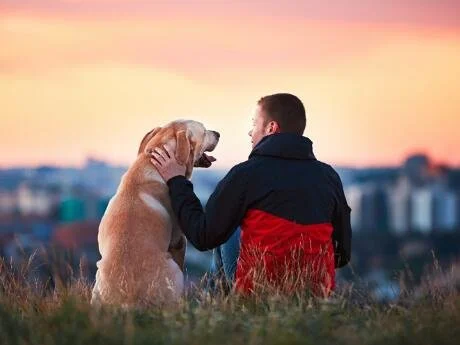
Here’s a signal lots of people miss. Most dogs find being held or restrained stressful. Dogs who like each other may sit close together, even touch, but you rarely see them wrapped around one another.
So next time you hug your dog, watch how they react. Are their ears pulled back? Can you see the whites of their eyes? Does their face look tense? Plenty of dogs will put up with a hug, but very few genuinely enjoy it.
What many dogs do love is a good massage or scratch on their flanks and thighs, as long as it’s introduced slowly and at their own pace.
Think twice before leaning over
When one dog stands over another, especially stiffly and with the tail held high, that’s a threat. So be careful about leaning over a dog or putting your hand on their head, particularly if it’s a dog you don’t know well.
Working together
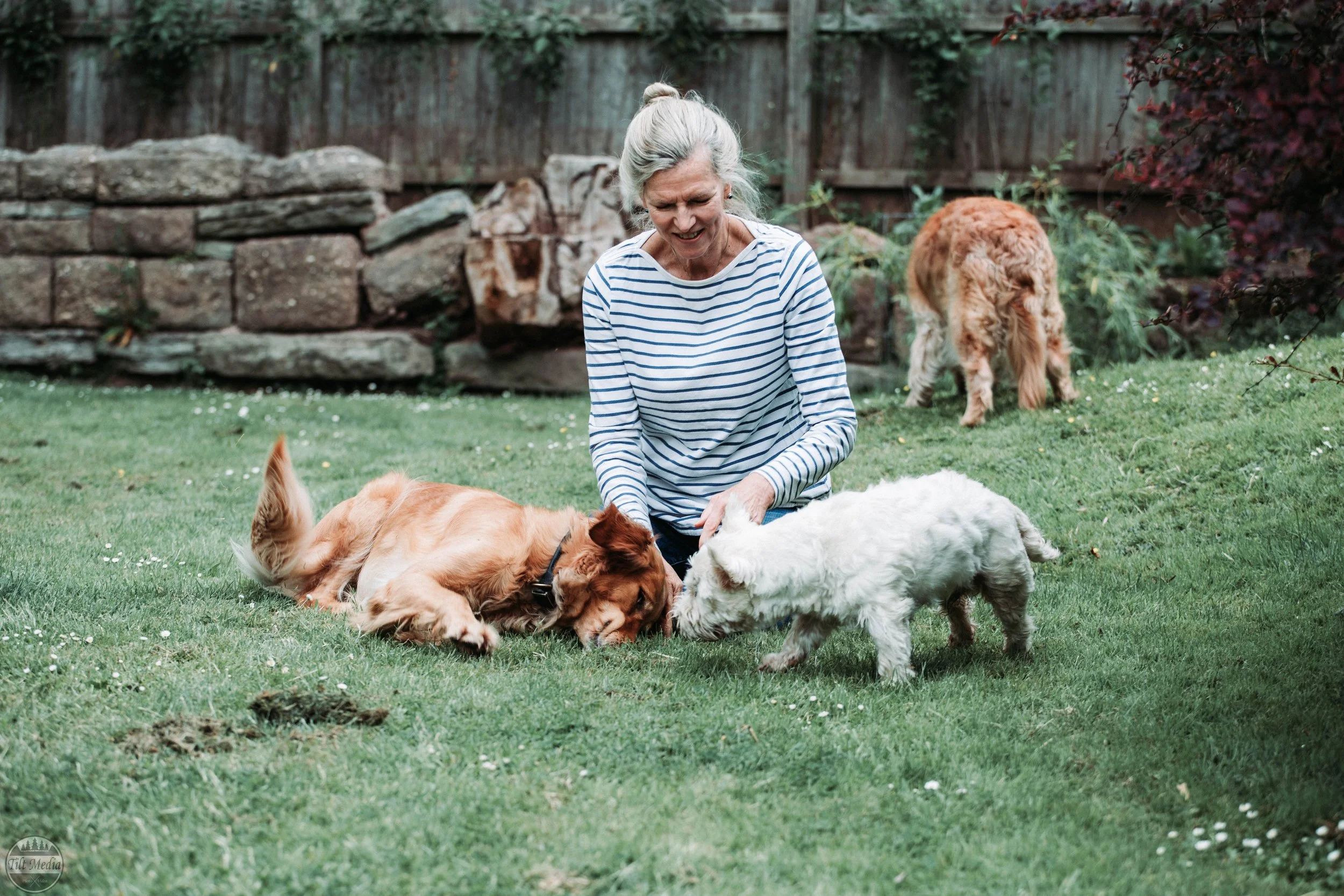
People often tell me my dogs are well trained, and to a point that’s true. They understand the cues I’ve taught them. But more importantly, they know I work with them rather than just giving orders, and that I pay attention to what they’re telling me about how they feel. We’re a team, and they’ve grown into well-mannered, focussed dogs who are keen to please.
Learning each other’s language
Our dogs work hard to understand both our words and our body language. If we’re aware of what our bodies are saying, and we stay consistent when we train, they’ll understand us better and be even keener to work with us.
So let’s return the favour. Let’s learn their language too and be sensitive to how they’re feeling. That’s when we really start to understand each other and build the close companionship we’re all aiming for.
